
Can Cracked Windows Be Repaired or Replaced?
A crack across a window can start as a thin line that is easy to ignore. Then a hot afternoon, a cool evening, or the pressure of opening the sash causes it to spread. For homeowners, the immediate question is simple: can cracked windows be repaired, or is replacement the safer choice?
The answer depends on what is cracked, how extensive the damage is, and the condition of the window around it. In many cases, the glass portion of a window can be professionally replaced without replacing the entire window. But when the frame, seals, or operation of an older window have also failed, a full replacement may be the better long-term investment.
Can Cracked Windows Be Repaired?
A cracked pane is not usually repaired in the same way a chipped windshield might be. Residential window glass is designed to provide a clear, secure barrier against weather, dust, and unwanted air movement. Once it has cracked, filling the damage does not restore the glass to its original strength or appearance.
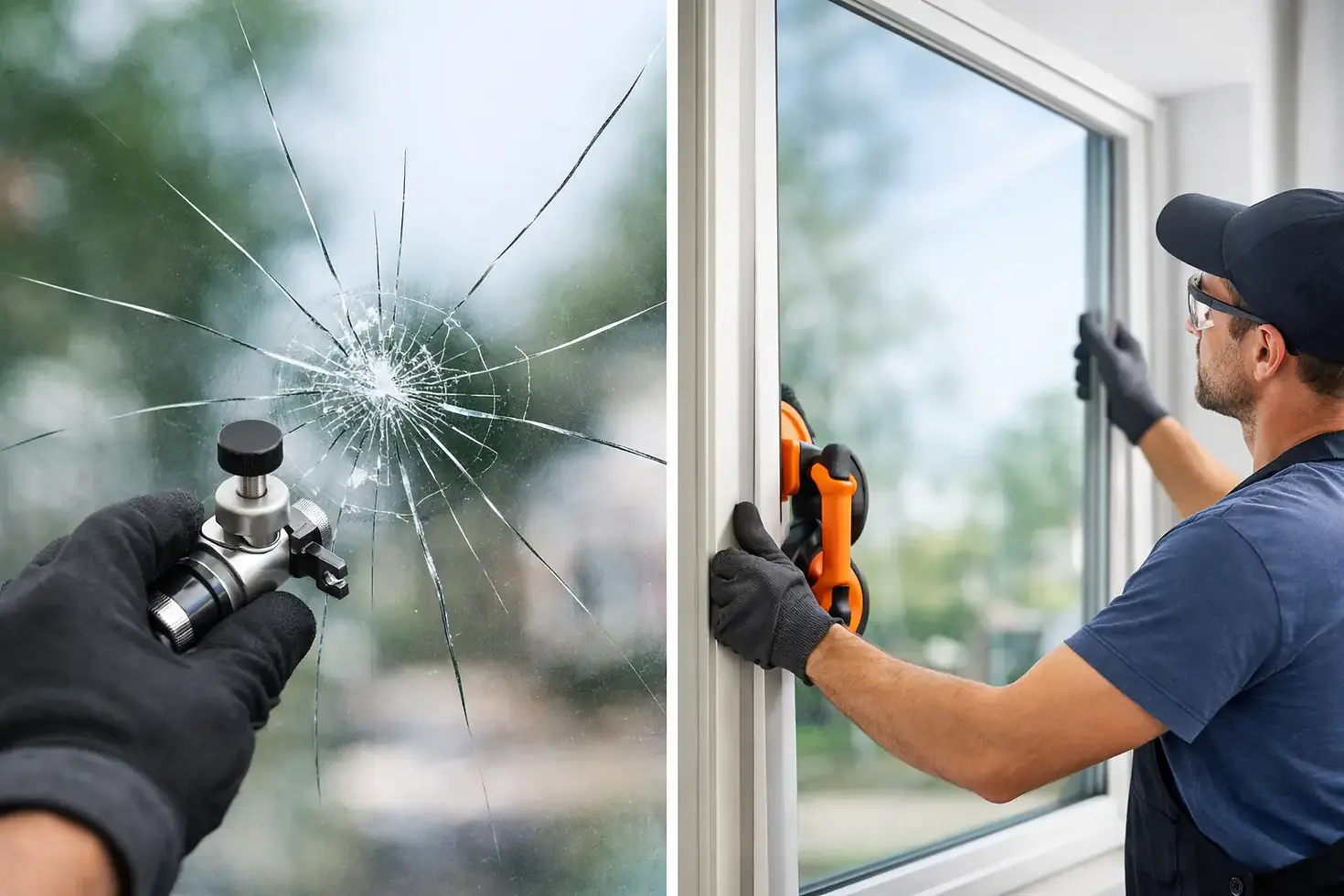
The practical repair is often a glass replacement. A qualified glass professional can remove the damaged pane or insulated glass unit and install new glass that fits the existing frame. This is often possible when the window frame is sound, the sash still operates correctly, and the damage is limited to the glass.
That distinction matters. Replacing the glass can solve an isolated break efficiently. Replacing the complete window can solve larger concerns, such as drafts, failing seals, difficult operation, water intrusion, or an outdated frame that no longer supports reliable performance.
When glass-only replacement makes sense
Glass replacement is often a good option when one pane has been cracked by an impact, such as a wayward baseball, landscaping work, or a storm-blown object. It can also make sense when the surrounding frame is in good condition and matches the other windows in your home.
For double-pane windows, a professional may be able to replace the insulated glass unit rather than the entire window. This preserves the existing frame while restoring the sealed space between the panes that helps manage heat transfer and outside noise.
A glass-only solution is especially worth considering when the window is relatively new, opens and locks properly, and has no signs of moisture damage around the frame.
When a full window replacement is the better answer
A cracked pane sometimes reveals a bigger issue. If the frame is warped, deteriorated, leaking, or hard to operate, installing new glass alone may leave you with the same underlying problems. The new pane may look better, but the window can still allow outside heat, dust, and drafts into the home.
Full replacement may be the more sensible choice if you notice several concerns at once: condensation between panes, recurring foggy glass, peeling finishes, soft or damaged framing, poor locks, or rooms that feel uncomfortable near the windows. In Bakersfield, where summer temperatures place real demands on a home's exterior, inefficient windows can make certain rooms harder to keep comfortable.
Replacement also gives homeowners an opportunity to improve curb appeal and update older styles. Vinyl retrofit windows can provide a clean appearance, dependable operation, and improved energy efficiency without turning a necessary repair into a drawn-out project.
What Type of Crack Do You Have?
The shape and location of a crack can provide clues about what caused it and how quickly it should be addressed. It cannot replace a professional inspection, but it can help you make a safer decision.
An impact crack often has a visible point where an object struck the glass, with lines spreading outward from that point. This type of damage may remain localized at first, but the pane is compromised and can break further with normal vibration or temperature changes.
A stress crack usually begins near an edge and may develop without an obvious impact. Sudden temperature differences can contribute to stress cracks, particularly if part of a window is in direct sun while another part is shaded. Improper installation, pressure in the frame, or movement in the home can also play a role.
A crack in a single-pane window is generally straightforward to identify. Double-pane windows require closer attention because damage may affect one pane while the other remains intact. If the window looks cloudy or has moisture trapped between the panes, the insulated seal may have failed even if you cannot see a major crack.
Tempered glass, commonly used near doors and in locations where safety glass is required, behaves differently. When it fails, it often breaks into many small pieces rather than developing a long crack. This requires prompt professional attention because the opening can quickly become unprotected.
Why You Should Not Put Off a Cracked Window
Even a small crack changes how a window performs. The most obvious concern is safety. Damaged glass is weaker than intact glass and may shatter unexpectedly, especially if the crack spreads to an edge or the window is bumped during everyday use.
A crack can also compromise your home's protection from the elements. Small openings around damaged glass can allow windblown dust, moisture, and hot outside air to enter. That is particularly frustrating during Bakersfield's dry, hot months, when your air conditioning system is already working hard.
Security is another consideration. A cracked pane can be easier to break through than intact glass. Windows on ground-level rooms, near entry points, or in frequently used areas should be assessed promptly rather than treated as a cosmetic issue.
Finally, a visible crack affects the appearance of your home. Whether it is on a front-facing window or a sliding glass door, broken glass can make an otherwise well-maintained property feel neglected. Addressing it early helps protect both the look and function of the space.
What to Do While You Arrange Professional Service
If the glass is cracked but still in place, avoid opening, closing, or putting pressure on the window. Keep children and pets away from the area, and do not lean furniture or other items against the glass.
For a small stable crack, covering the damaged area with clear tape may help limit loose fragments temporarily. This is not a repair, and it should not be used as a reason to delay service. Do not attempt to drill, cut, or glue the glass. These efforts can worsen the damage and create a greater safety risk.
If the glass has broken or is loose, carefully clear people away from the area and protect the opening with a temporary barrier if it can be done safely. Avoid handling large pieces of broken glass yourself. A professional can assess the frame, remove damaged material safely, and determine whether glass replacement or a new window is appropriate.
How Professionals Decide Between Repair and Replacement
A proper evaluation looks beyond the visible crack. The condition of the frame, sash, glazing, locks, weatherstripping, and surrounding wall area all affect the recommendation. A technician will also consider the window style, whether it is single- or double-pane, and whether matching glass is available for the existing unit.
For an insulated window, preserving energy performance matters. Replacing one broken pane incorrectly can leave the unit poorly sealed or mismatched. Professional installation helps ensure the new glass is properly fitted, secured, and sealed so the window can perform as intended.
The decision should also reflect your plans for the home. If you expect to replace aging windows soon, putting money into a temporary glass-only solution may not be the best path. On the other hand, if the window is otherwise in excellent condition, replacing the damaged glass can be a practical way to restore it without changing the entire opening.
A Better Time to Evaluate Your Other Windows
One cracked window does not automatically mean every window needs replacement. Still, it is a useful moment to look at the rest of the home. Check for fogging between panes, noticeable drafts, sticky operation, fading near windows, or rooms that become uncomfortably warm in the afternoon.
These signs can point to windows that have reached the end of their useful life. Addressing several aging windows together may provide a more consistent appearance and help improve comfort throughout the home. It also avoids the cycle of dealing with one failure after another.
Atlas Glass helps homeowners assess damaged glass with the bigger picture in mind. The goal is not to recommend more work than your home needs. It is to provide a clear path that restores safety now and supports the comfort, efficiency, and appearance you want from your windows over time.
A cracked window deserves attention, but it does not always call for a complete replacement. Have the damage evaluated before the crack spreads, and choose the solution that makes sense for the condition of the window and the way you want your home to perform.


Comments