
How to Fix Sliding Door Rollers the Right Way
A sliding glass door should open with a steady, light glide. When it takes two hands to move, drags along the track, or makes a grinding sound, the rollers are often the cause. Knowing how to fix sliding door rollers can help you identify whether your door needs a simple adjustment, a thorough cleaning, or professional repair before a small issue turns into damage to the track or frame.
For Bakersfield homeowners, dust, windblown debris, and years of regular use can all make sliding door hardware work harder than it should. The good news is that many roller problems have a clear cause. The key is to avoid forcing the door, since a heavy sliding glass panel can damage the track or create a safety concern when handled incorrectly.
Why Sliding Door Rollers Stop Working Properly
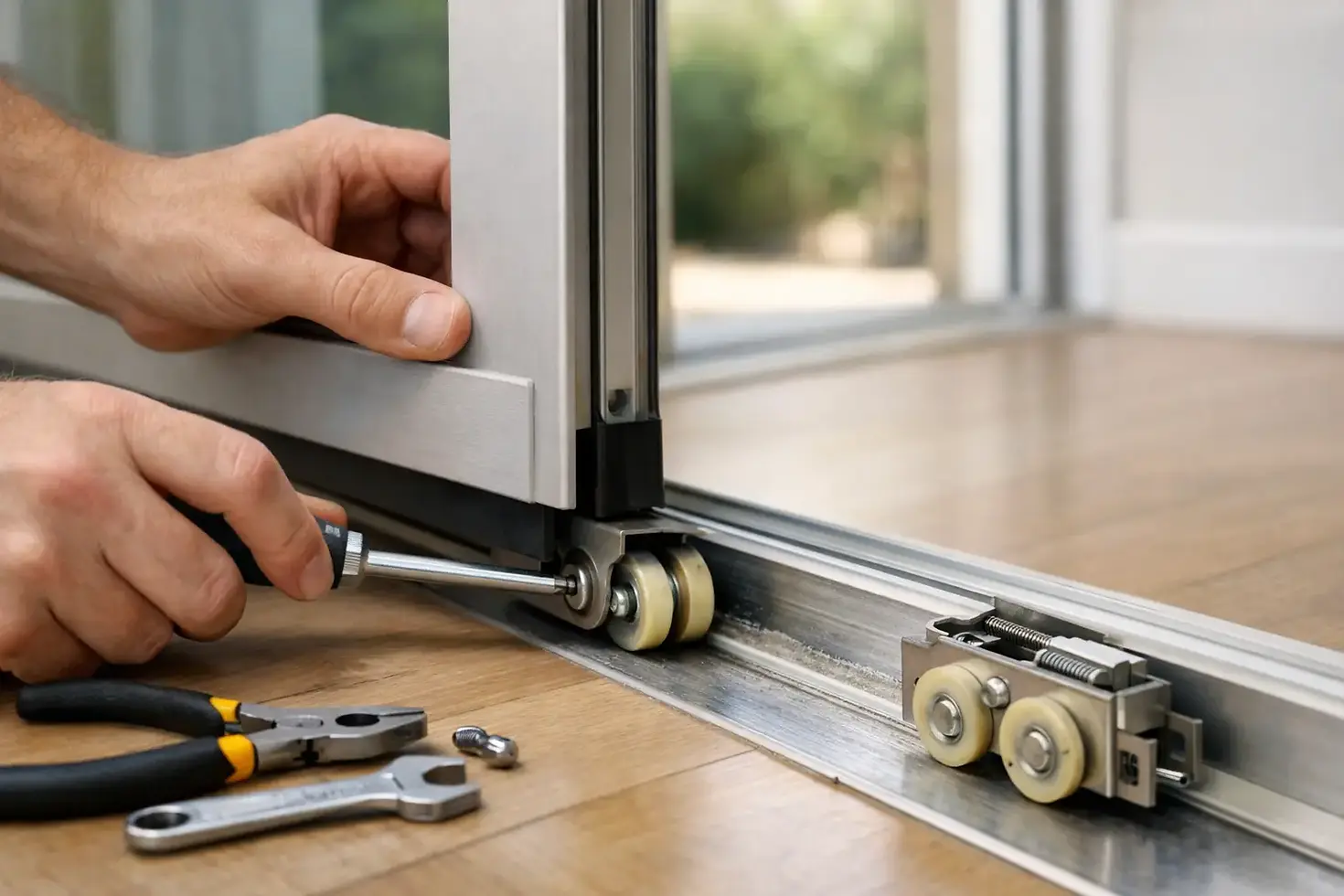
Rollers are the small wheel assemblies mounted near the bottom corners of a sliding door panel. They carry the panel's weight and allow it to move across the lower track. Over time, those wheels can collect dirt, wear flat, rust, crack, or lose their adjustment.
A door that feels difficult to slide does not always need new rollers. Sometimes the door is sitting too low and scraping the track. In other cases, a buildup of dust, pet hair, leaves, or small stones is blocking the wheels. If the door has been dragging for a long time, however, the metal track itself may be worn or bent. That is when a roller replacement alone may not restore a smooth glide.
Pay attention to the symptoms. A door that sticks in only one spot may have a damaged section of track. A door that drags its entire path may be out of adjustment or have worn rollers. Grinding, popping, or a panel that leans or rattles in the frame are stronger signs that the roller assemblies need closer inspection.
Start With Cleaning and a Simple Adjustment
Before removing a door panel, clean the bottom track thoroughly. Vacuum loose debris from the channel, then use a stiff nylon brush and a damp cloth to remove packed dirt. Dry the track completely afterward. Avoid coating the track with thick grease or oil. Those products collect dust quickly and can make the problem worse. A light silicone-based lubricant made for sliding door tracks can be useful after cleaning, but it will not fix worn wheels or a damaged track.
Next, look for the roller adjustment screws. On many patio doors, they are located near the bottom of the vertical side rails, sometimes covered by small plastic caps. The screws raise or lower each corner of the panel.
With the door closed, adjust each side in small, equal increments. Turning the screws one way raises the panel, while turning the other lowers it, although the direction varies by door manufacturer. Make a quarter-turn adjustment, then test the door. The goal is to lift the panel enough that it clears the lower track without raising it so high that it rubs against the top frame.
If the door begins moving smoothly after cleaning and adjustment, you may not need to remove it. Continue to check that the latch aligns correctly when closed. A roller adjustment changes the panel's height, so the lock may need a minor adjustment as well.
How to Fix Sliding Door Rollers by Replacing Them
If cleaning and adjustment do not help, the rollers may be worn out. Replacing them is possible for a capable homeowner, but it is not a one-person project. Sliding glass panels are heavy, awkward, and vulnerable to breakage if they are twisted, dropped, or placed on an uneven surface.
Before you begin, gather a screwdriver set, a vacuum, a nylon brush, a soft blanket or padded surface, work gloves, and replacement rollers that match your existing door. The replacement part must match the housing size, wheel diameter, mounting holes, and adjustment design. A roller that looks similar may not fit correctly or support the door's weight.
Remove the Door Panel Carefully
Open the door partway and remove any screen door first if it interferes with access. Then locate the roller adjustment screws and lower the rollers as far as they will go. This creates more clearance between the glass panel and the frame.
Some doors also have an anti-lift block or stop near the top of the frame. Remove it if necessary, keeping the screws in a safe place. With a helper holding the panel securely, lift the door upward into the top track, pull the bottom edge toward you, and carefully lower the panel onto a padded surface.
Do not pry aggressively against the glass, frame, or track. If the panel will not lift out, check for a remaining stop, trim piece, or adjustment issue. Forcing the door can crack the glass or bend the frame.
Inspect the Rollers and Track
With the panel removed, inspect both bottom corners. Roller assemblies are commonly held in place by screws or may slide out once the frame fasteners are removed. Take clear photos before disassembly so you can confirm the orientation of the new parts.
Remove one roller assembly at a time and compare it directly with the replacement. Check the old wheel for flat spots, wobble, rust, broken bearings, or a seized axle. Even if only one roller appears damaged, replacing both is usually the better choice. The door's weight should be supported evenly, and a new roller paired with a badly worn one can leave the panel uneven.
While the panel is out, inspect the lower track closely. Light surface wear can often be cleaned, but deep grooves, cracks, sharp edges, or a crushed section may continue damaging new rollers. Track damage is one of the most common reasons a door stays hard to operate after roller replacement.
Reinstall and Fine-Tune the Door
Install the new rollers in the same position as the originals. Set their adjustment screws to a lowered position before returning the door to the frame. With your helper, lift the panel into the upper channel, guide the bottom back over the lower track, and lower it carefully into place.
Once the door is seated, raise each roller gradually until the panel glides smoothly and sits squarely in the frame. Test it several times from fully open to fully closed. The door should move without scraping, and the latch should engage without lifting, pushing, or forcing the panel.
Reinstall any anti-lift block, trim, or screen door that was removed. Finish by cleaning the track again and applying a small amount of appropriate dry or silicone-based lubricant if needed.
When It Is Better to Call a Professional
Sliding door roller repair is a practical project when the door is in good condition, the rollers are accessible, and you have help handling the panel. It is better to schedule professional service when the glass is cracked, the frame is bent, the track is badly worn, the panel will not come out safely, or the replacement parts are difficult to identify.
Professional repair is also a smart choice if the door has air leaks, water intrusion, lock problems, or damaged weatherstripping in addition to roller trouble. Those issues can affect home comfort and security, especially during hot, dusty Bakersfield weather. A complete inspection can address the door's operation instead of treating only the most obvious symptom.
Atlas Glass helps homeowners with sliding glass door repair when worn rollers, damaged tracks, or difficult-to-handle panels need experienced attention. Proper repair protects the door, improves everyday convenience, and can extend the life of an existing glass door.
Keep the Door Rolling Smoothly
A few minutes of care can reduce wear on your door rollers. Vacuum the bottom track regularly, especially after windy days, and wipe away dirt before it becomes compacted. Avoid slamming the panel or forcing it when it begins to stick. Early adjustment is easier on the rollers and track than months of dragging.
A sliding door that moves quietly and closes securely makes a noticeable difference in how your home feels. If a quick cleaning no longer restores that easy glide, addressing the rollers promptly can help prevent a larger repair later.


Comments